Monday, May 5, 2014

WHAT: Video about Easter Monday

In addition to my May newsletter, I created this video to give a further glimpse into an Easter tradition I experienced in Hungary this year.  If you did not receive my newsletter and would like a copy, please comment and I'll send one your way!

-Mere


Monday, April 14, 2014

WHAT: The "A" Word


In a small kitchen on the fourth floor of an apartment building situated in the High Tatras,  our country coordinator Miriam asked each of us what traditions and associations we had with Lent.  As I listened to my fellow YAGM Hungary volunteers explain their history with Lent and the behavioral, mental, or habitual changes associated with the church season following Epiphany- I couldn’t help but daydream about my own recollections of the forty days before Easter.

Tucked away in the Blue Ridge Mountains of North Carolina, my home congregation would join every Wednesday night for supper and worship during the season of Lent.  We enjoyed hearty spaghetti or chili dinners and afterwards harmonized and prayed to the melodies of Holden Evening Prayer.  I loved these Wednesday nights for the fellowship we shared and for the beauty of the service we sang.

Sunday services were different during Lent and had an unusual, almost lacking feel to them.  Several chunks of the Liturgy were omitted including anything that had the “A” word in it.  To be completely honest, as a young child I secretly liked that Sunday church did not take as long during Lent, and occasionally my sister and I would use Sundays as “cheat days” for whatever we had given up. 

Angela, Mom, and Me Easter Sunday 1997
Hi-C Boppin' Berry would probably have been in our
Easter baskets after 40 days without it
For me as well as many others, Lent meant giving up something for the forty days between Ash Wednesday and Easter.  Many argue on how this time is actually counted and which days are included or not, but many people recognize some sort of Lenten devotion by giving up something.  As a child this included me giving up Hi-C Boppin’ Berry Juice, chocolate chip cookies, soda, AIM…you know, everything a pre-teen old holds near and dear. 

But, Lent also meant giving up another thing, a particular word, this “A” word.  It literally means, “Praise the Lord” and is sung, said, spoken, and prayed almost every day of the year- especially on Easter when we recognize, rejoice, and celebrate the resurrection of Jesus Christ.  Yet, during Lent, the word was stripped from my vocabulary and literally buried below the cross at my home congregation.  I’m not quite sure if I ever fully understood the explanation of why we buried this “A” word.  And, I still don’t fully understand this time in the church year.

Lent usually felt somber for reasons of penance, fasting, reflection, self-control and preparation for the celebration of the resurrection.  Perhaps the lack of the A-word added to this somberness and helped us to stay focused on the season.  However, this year the season has felt strange and somber for other reasons.

Angela, Dad, and Me at the Blowing Rock Easter egg hunt.
Hungary will celebrate a special day involving Easter eggs
the Monday after Easter.
Lent has felt funny for me this year in Hungary.  To be honest I hardly even noticed it started when it did.  We did not recognize Ash Wednesday or hold services, which is common for the Lutheran Church in Hungary.  Additionally I was without this little thing called Mardi Gras, which has dominated my pre-Lenten time for the past 8 years in a way that quite publically displays the feast before the fast.  And believe you me, I didn’t give up anything this year…ask me how much peanut butter, nutella, and bread I’ve gone through the past few weeks.  It’s embarrassing. All three items are good candidates for next Lent, but this season I’ve fully needed them.

And you know what else I’ve needed?   I’ve needed to say the “A-word” Alleluia.  There.  I said it.  And it’s just the start of Holy Week, the time I remember being most solemn during Lent.  But I have desperately needed to say Alleluia this season to have a reminder of the already risen Jesus Christ who granted all of us eternal life through the waters of baptism and sacrifice.  I’ve had a tough few weeks of missing home, adjusting to a new host family, and struggling with what exactly I’m actually doing here.  I lost a sense of self, identify, confidence, and above all forgot my true identity as a child of God who was called and claimed through the waters of baptism.

Back in that same kitchen in the High Tatras just days after Lent began, Miriam focused much of our discussion not so much around Lent, but actually around the waters of baptism.  I was very interested to learn that some scholars believe the historical roots of Lent are actually seamlessly connected to baptism.  Earlier in time when it was not common to baptize infants, individuals seeking to be baptized would undergo a time of fasting and preparation before heading to the font.  Many people especially chose the time leading up to Easter Sunday, which was a common Sunday for many to be baptized.  However, overtime society shifted to baptizing infants, and this time of fasting and preparation was no longer needed or used to prepare individuals for baptism.  The fasting and preparation before Easter evolved for different purposes.

While scholars, theologians, and pastors may come to different meanings about the season of Lent and it's current purpose, it has been extremely worthwhile for me this year to completely focus on my baptism in preparation for Easter.  Because Christ has already died, risen, and promised to come again, I am blessed with the daily renewal of the gift of baptism and the reminder of my identity through Christ Jesus.  Though this message may be coming a week earlier than most would proclaim it, I think it is as ever important to remember and recognize every season and day of the year.

More later-

Mere

Wednesday, March 26, 2014

March Madness


My Mom Sara, Host Mom Zsuzsa and I enjoy the beautiful
night lights Budapest offers.  This particular day was Zsuzsa
and Lajos' wedding anniversary and we celebrated with a
delicious dinner in the city.
I am experiencing a different kind of March Madness in Hungary this year.  Though I didn’t actually fill out a bracket, I’m having my own crazy assortment of games and match-ups including some exciting experiences and also a few heartbreaking upsets. But, I am overwhelmingly thrilled with how this March is developing.

The beginning of March brought a homesickness I had not yet experienced thus far in the YAGM journey.  I was extremely lucky to have my Mom here for 10 days back in February to meet my community and do some travel on our own.  Perhaps her absence after such a unique experience together made me more aware of how much I miss my family in the States.  However, I am reminded constantly of the abundant family members I have in Hungary!

Host brother # 3 Bence, Host Dad #2 József, Host Mom #2 Edit, Host Mom #1 Zsuzsa,
Host Dad #2  Lajos. I am incredibly lucky to be surrounded by such loving people!!

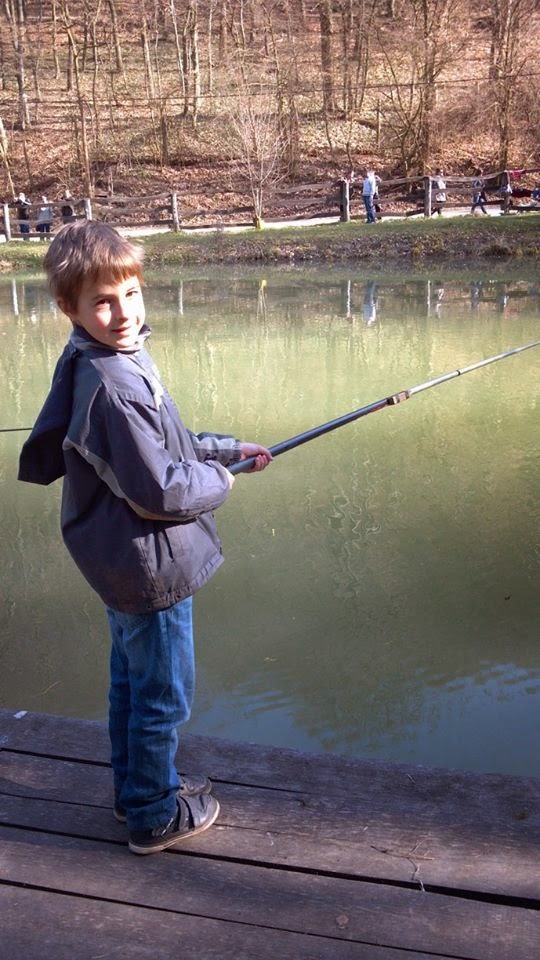
Áron catching dinner
In fact, I have a new family to call my own!  At the beginning of March I moved in with my second host-family: a move that has been planned all year. I am excited to experience life now with Edit and her husband József  and their sons Bence and Áron.  Edit and I work together at the Kindergarten and have developed a wonderful relationship- and I think she enjoys having a daughter!  Bence is 16 and an excellent English speaker and an absolutely incredible musician.  He plays the violin at many cultural events in Piliscsaba and truly is a joy to watch.  Áron has the energy of all the 8 year old boys in the world and loves doing anything active.  He’s at such a fun age that I enjoy being a part of.


Áron, Bence, and I hit the slopes in Austria for a weekend
of bonding and hanging out
After getting settled in with the new family for a week, I packed a bag and traveled to the High Tatra Mountains in Slovakia for the YAGM Hungary Lenten Retreat.   After a few days of skiing, hiking, worshiping, and eating delicious meals- I was rejuvenated with energy and excited to return to Piliscsaba to say goodbye to winter and welcome the Spring season.

Flowers are blooming and there are lots of babies being born, and for these reasons and many more I find myself constantly smiling.  As my time left in Piliscsaba approaches a mere 4 months, I recognize the need to enjoy and appreciate every day.

Miriam leads the YAGM volunteers in a worship on a
mountainside in the High Tatras of Slovakia.  Talk
about realizing the beauty of God's creation
If any of you win that March Madness Billion, consider sending some to the YAGM offices at the ELCA- this ministry is incredible and God has and continues to work amazingly through this program!

More later, and I promise sooner rather than later.

-Mere

Sunday, February 2, 2014

WHAT: Ecumenical Week in Piliscsaba


This is the sanctuary where the Lutheran congregation
in Piliscsaba worships on Sundays.
Several congregations worshipped together last week as a community during Piliscsaba’s ecumenical week.  Three of the main churches sit less than half a mile away from each other along the rocky Pilis roads, and each holds separate services on Sundays.  However, last week we joined as a community, worshipping in different churches, sharing liturgies, and hearing from clergy of different denominations. 

In my community there is a large population of Catholics, a smaller number of Calvinists, and even a smaller number of Lutherans.  This breakdown is actually quite representative of Hungary as a country.  Over 50% of Hungarians claim Catholicism, with a heavy presence of the Roman Catholic population in the western part of the country.  Next, about one-fifth of the population of Hungary is Calvinist (also known as Reform) and their churches are easily recognized because of the star adorned on top of the steeple of their churches, rather than a cross that would often denote a Catholic place of worship.  And the Lutherans make up about three to five percent of the Hungarian population.  Though my congregation in Piliscsaba is small, it is filled with plenty of families with many children, and creates a wonderful network of friendship and support.

Last Sunday afternoon I joined in the final ecumenical service held at the Catholic church just a ten minute walk my home.  The order of worship was comprised of liturgies from each of the three denominations and different pastors served during different parts of worship.  Luckily, the liturgy was printed in the bulletin so it was easier for me to follow along and attempt to translate what was being said.  I’ve found that my reading skills in understanding Hungarian are a bit better than my listening comprehension. 

At one point during the service I noticed that I didn’t need to have my eyes glued to the bulletin because the words being recited sounded familiar.  We were saying the Creed, a statement of belief that we vocally recognize each week.  And, the incredible thing was that the entire church was reciting the Creed by heart, no matter what denomination or congregation the people claimed.  Together we stated our belief in one God, one Lord Jesus Christ, the Holy Spirit, the forgiveness of sins, and the promise of eternal life.  I am ever aware that the body of Christ is a diverse being with many members and many parts, and it was refreshing to be reminded that no matter our theological differences, we all are members of the grace and peace that makes up God's kingdom.

More later.
-Mere

Friday, January 31, 2014

WHAT: A video of the dance!


Just a super quick follow-up on my last post.  Last Friday night many gathered in one of the schools in Piliscsaba to enjoy a night of folk dance.  Good thing I learned all those moves at the dance house, click here to see our performance!   My host parents are in the back left corner and my partner and I are beside them.

I will later write more surrounding the history of this dance and the land that it comes from.  I hope you enjoy the video! I certainly enjoyed dancing with these fine folks, and think it's quite special to learn something so unique and important to Hungarian culture.  I'd like to give a special thanks to Réka and Atilla, our dance instructors.
My host parents are directly in front of this picture, and my partner and I are right behind them.  We've been practicing this dance every Wednesday night for the past several months.

More later

-Mere

Thursday, January 16, 2014

WHERE: A Dance House


Imagine speed-dating.  Now replace the 90 second conversation at a table for two with a 90 second folk dance routine in a crowded ballroom.  That is just what I did for an hour and a half one Wednesday night in some dive of a place just outside of Budapest.

My host parents were going to a “dance house” to meet up with some high school friends of theirs and they invited me along.  Before going, I was familiar with the concept of a “dance house.”  Usually a live folk band plays music and friends sit at tables in conversation while partners occasionally join in the ancient, yet well known, dances from Transylvania.  So when my host parents invited me to go, I said, “Yeah sure, why not!”  I anticipated watching more than participating, and was along for the ride.

My initial nerves for the night were soothed, or rather shocked by a sip of pálinka- the famous Hungarian beverage that is often made in the back yards of Hungarian homes.  It’s the moonshine of Magyarország, and always offered as a sign of hospitality at social and family gatherings.  János Lacki defines it as a, “chemical cocktail” yet I find the pear or plum flavor combined with good people and laughter somewhat digestible.  Either way we arrived late, per usual, accepted the welcome drink and hurried into the ball room.

I walked through the door and observed a large circle of people practicing a rhythm the couple in the center was displaying.  There must have been 60 people gathered ranging from 20 to 60 years of age.  The room was stuffy and the sounds of heels tapping on the scuffed wooden floor filled the air, along with an aroma of perspiration.  I had no partner upon walking in, but precisely seven seconds later a man nearing 50 swooped in and sent me spinning. 

The combination seemed familiar and was similar to something I had learned in the previous months.  Yet still, I was stumbling and muttering, “I’m sorry” and “I don’t know this” in my broken Hungarian.  Immediately upon learning I was not a native speaker the man began instructing me in German.  As soon as I caught my breath to mention that I speak English, a bell rang. The men stayed standing in place and the women moved one space to the right, it was on to the next one.

The next one must have barely been 30, his English was quite good, a common characteristic of Hungarians his age and his dancing moves were just as skilled.  He quickly went over the basic step of this particular dance and I had just enough time to become comfortable with it when the bell rang.  On to the next one.

The next one was twice as wide but the same height as me, or perhaps a bit shorter as I noticed the hairs poking out of his mostly bald head.  His chubby fingers spun me with great confidence and he never spoke a word, until the bell rang and he offered a word of thanks.

The next one was tall and lanky and my Hungarian skills were better than his dancing skills.  Through bumping and stepping on my feet, as well as the feet of the couple beside us, we somehow managed to establish some sort of rhythm.  And I was a bit relieved to hear the bell a few seconds later.

For the next hour the bell continued to ring every two minutes or so, with brief tutorials  from the couple in the middle on moves and steps to add.  And with every ring of the bell I continued moving to the right, on to the next one.  I was laughing constantly and learning to trust myself and the ability of the stranger right across from me.

Two years ago when I was in Europe studying abroad, I felt a bit like I was speed-dating the countries.  Every other weekend my friends and I would pick somewhere new to travel, and the next weekend it was on to the next one.  I got brief glimpses of each country's culture, personality, language, and food.  And occasionally I really clicked with one, but I never got to stay long enough to really know it.

It takes time to develop a rhythm and relationship with a person or with a place.  I'm happy to be past the small talk with Hungary.  I know now where the locals eat, where they like to vacation, and why they speak of "Greater Hungary" as if the current borders are not correct.  I've experienced a Hungarian prom, celebrated Christmas in a Hungarian home, and I eat paprika like it's my job.  I am immensely grateful for the opportunity to dance with this country and it's people for an entire year, and look forward to the new steps and routines that are sure to come.

Monday, January 6, 2014

WHAT: There grammar


Usually I'm a stickler for the correct use of your/you’re, there/their/they’re, two/too/to and the countless other grammatical mistakes that uneducated…and educated people make.  I used to see these mistakes on social media, e-mails, and assignments and absolutely cringe.  I was privileged to have an education first of all, and on top of that to have teachers that stressed the importance of communicating effectively and correctly.  They told me that if I make one grammatical mistake on my cover letter, I should consider my application at a significant disadvantage.  Because, the truth is people judge grammatical mistakes to some degree.  I myself have been guilty of looking negatively at these mistakes and the people who make them. 

But after living in Hungary for four months and using a language I knew nothing about four months ago, I have a new appreciation for grammar mistakes and just mistakes in general.  You see, in the Hungarian education system English teachers stress grammar like no other.  To teachers, it is more important to hear a student speak one sentence correctly than to hear mistakes in several sentences that fully express an idea.

Because of this, people are terrified to speak English.  I have found this in adults and children alike.  Whenever conversations begin people automatically say, “I can’t speak English, please correct me”.  When in fact, I’ve found that most times these people know English extremely well.  They comprehend almost everything and formulate sentences to respond, yet they get stuck behind which tense and conjugation to use.  People talk about past-perfect and past-participle and the accusative case and hell I don’t even know what half those things mean.  Sometimes I have to say, “Just talk!”

And when they do start talking, I hear ideas, opinions, sincere concerns, and words of thanks.  Through the Hungarian accent and occasional mistakes, I understand them.  I understand what they are conveying and always try to listen three times as much as I speak.  The mistakes still come and go, but they enjoy expressing themselves instead of hiding behind their thoughts.

Constantly I’m reminded of my summers at camp, and this particular topic reminds me of the act and language of prayer.  Sometimes my campers would get intimidated about praying.  They were intimidated in trying to sound as eloquent as pastors and other leaders.  They were intimidated in knowing what to say, or not knowing how to say what they wanted to.  The great thing about prayer is that there are no grammatical rules, tenses, formulas, or vocab words.  And one of the things I loved about being a counselor was watching my campers gain confidence in praying, whether it was for an entire group or for their personal silent thoughts.  Words for prayer come freely, and sometimes not so freely, but whatever the case my suggestion is still the same, “Just Pray!”  God understands and hears our thoughts and words no matter how they are communicated. 

So to all foreign language learnersJust talk!  Make mistakes and don’t be afraid of them!  In trying new sentence structures or words, using hand gestures, and laughing when you have no clue what’s going on...progress is made.  And to all people looking to connect or communicate with God for any reason—Just pray!  Be confident in knowing that you are understood and listened to carefully.  Don’t ask me how to translate His response though…that’s a different story.

More later,

Mere

This post is dedicated to my first Hungarian teacher and friend-Teri.
Pictured in the middle surrounded by the YAGM Hungary volunteers.
Thank you for teaching us so much, and giving us enough knowledge
to make mistakes in this crazy native language of yours!